1. The Foundation of Security: Why Trezor Login Matters
A Trezor Login is fundamentally different from the traditional username-and-password model. In the crypto world, "Login" refers to the cryptographic handshake between your hardware device and your management software. When you initiate a Trezor Login, you are essentially asking your Trezor device to verify your identity through a physical PIN entry.
This process ensures that even if a hacker has remote access to your computer, they cannot access your funds because the "private keys" never leave the physical Trezor device. The actual Trezor Login happens within the secure environment of the hardware, providing a "Trusted Display" where you verify every action on the device's screen itself.
2. Navigating Trezor Suite: Your All-in-One Dashboard
Trezor Suite is the native companion application designed to provide a unified experience for all Trezor users. Whether you are using a Trezor Model One, the Trezor Safe 3, or the cutting-edge Trezor Safe 7, Trezor Suite is where you manage your portfolio.
Key Features of Trezor Suite:
Asset Management: Track Bitcoin, Ethereum, Solana, and thousands of other tokens in one place.
Privacy Tools: Access built-in Tor integration and CoinJoin to obscure your transaction history and IP address.
Trade Directly: Buy, sell, and swap crypto within the app using verified third-party providers.
Portfolio Tracking: View your wealth across multiple devices using the "Sync & Track" feature.
To experience these features, the first step is always the installation via trezor.io/start.
3. The Technical Bridge: Understanding Trezor Bridge
Many users wonder about the role of Trezor Bridge. Put simply, Trezor Bridge is a small piece of communication software that runs in the background of your computer. It acts as the translator between your web browser and your hardware device.
While the modern Trezor Suite desktop application has the bridge functionality built-in, you might still need to install the standalone Trezor Bridge if you prefer using the web-based version of the wallet. Without a functional Trezor Bridge, your browser will not be able to detect your device, preventing a successful Trezor Login. Always ensure you are running the latest version by checking the official downloads at trezor.io/start.
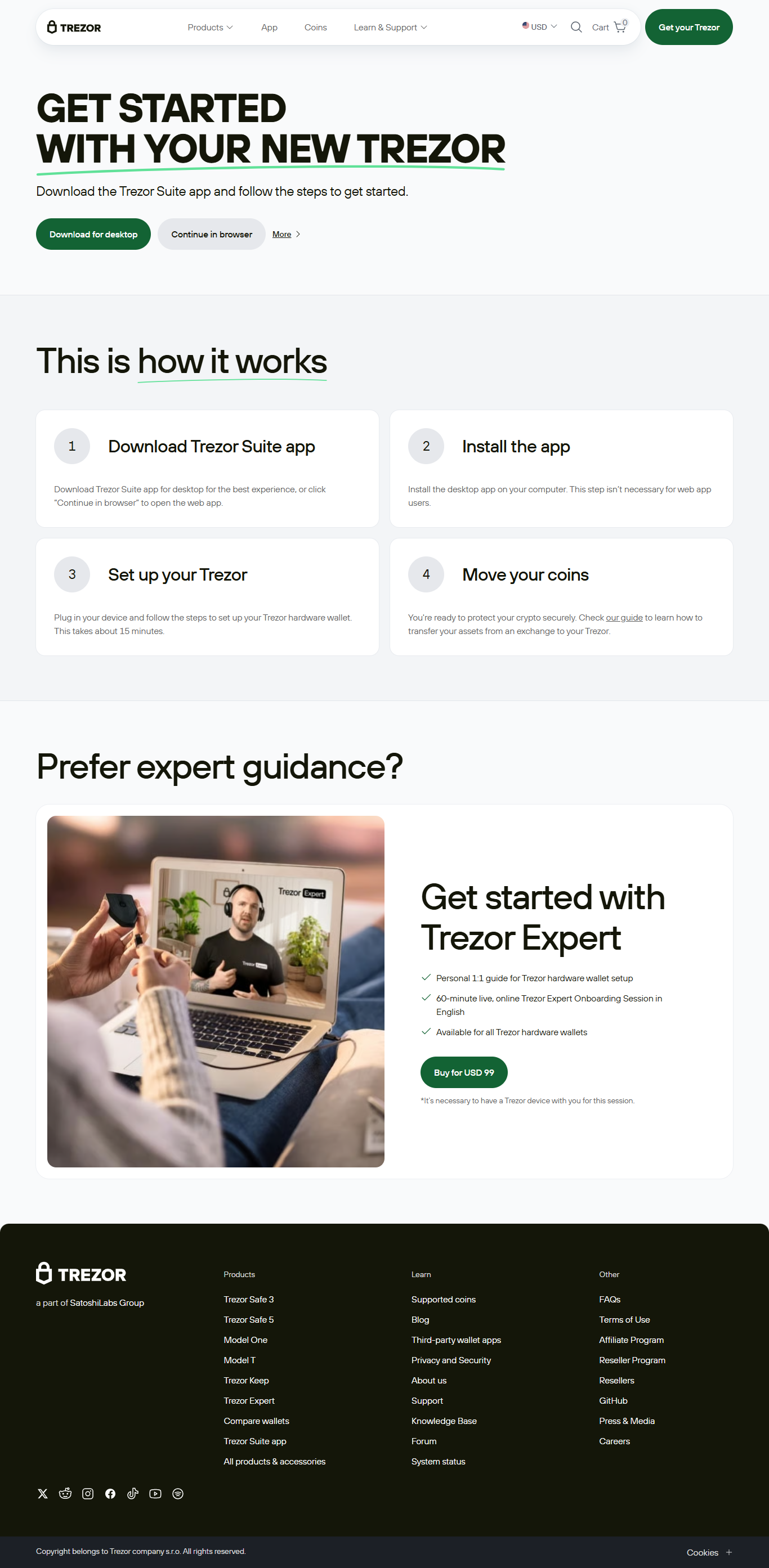
4. Setting Up Your Device at trezor.io/start
If you are unboxing a new device, your destination is trezor.io/start. This is the only legitimate starting point to initialize your hardware.
Step-by-Step Initialization:
Connect: Use the provided USB cable to link your device to your PC or Mac.
Download: Get the latest Trezor Suite desktop app from trezor.io/start.
Firmware: Your device arrives without firmware for security. Trezor Suite will install the latest version for you.
Backup: This is the most critical part of your Trezor Login setup. Write down your 12, 20, or 24-word recovery seed. This seed is your ultimate "master key."
PIN Setup: Create a strong PIN. This PIN will be required for every future Trezor Login.
5. Advanced Security: Passphrase and Multi-Share
Beyond the standard Trezor Login, advanced users can enable the Passphrase feature within Trezor Suite. A passphrase acts as a "25th word." It allows you to create hidden wallets that are invisible even if someone knows your PIN and has your recovery seed.
Furthermore, with newer devices like the Trezor Safe 5 and 7, you can use Multi-share Backup (Shamir Backup), which splits your recovery seed into multiple parts. This prevents a single point of failure, ensuring your Trezor Login capability is never permanently lost due to a single misplaced card.
Final Thoughts
The security of your digital future depends on the tools you choose today. By utilizing the official Trezor Suite, maintaining your Trezor Bridge connection, and always initiating your setup at trezor.io/start, you are taking the most proactive steps possible in the world of self-custody. A Trezor Login is your shield against the uncertainties of the digital age. Stay vigilant, keep your recovery seeds offline, and always verify your transactions on the device screen.
Frequently Asked Questions (FAQ)
1. Is Trezor Suite free to use? Yes, Trezor Suite is free, open-source software available for download at trezor.io/start.
2. Can I use Trezor Login on a mobile phone? Yes. Trezor Suite is fully compatible with Android (via USB or Bluetooth for Safe 7) and offers limited "View-only" or "Sync & Track" features for iOS users.
3. What happens if I lose my Trezor device? Your funds are not on the device; they are on the blockchain. You can recover your wallet on a new device using the recovery seed you created during the initial trezor.io/start setup.
4. Why does Trezor Suite ask me to update Trezor Bridge? Updates to Trezor Bridge ensure compatibility with new browser versions and security patches. Always update through the official prompts in the app.
5. How do I know if my Trezor Login is secure? Always check the "Trusted Display" on your physical device. If the address or amount on your Trezor screen doesn't match what you see in Trezor Suite, do not confirm the transaction.